2016 Bible Reading Plans

0e810129_bible-reading-plan-new-rotator

Your word is a lamp to my feet and a light to my path. (Psalm 119:105)

This is one of my favorite times of the year; the closing of one year and the beginning of another. As 2015 winds down, it is always good to consider how we will feed our soul in the upcoming year. Perhaps you have a book list you’ve compiled to work your way through. Or you’ve developed a network of mentors, counselors, a spiritual director and trusted friends you will carve out time for in order to develop yourself.

One of the best ways to feed your soul is the intake of God’s Word. God’s Word is not the only way to care for your soul, but it is a primary way. Every year Ligonier* ministries puts out a Bible reading guide that lists quite a few different ways to engage God’s Word. Some take you through God’s Word in a year, some take you through God’s Word over a few years. Take a look at the options listed below. Perhaps you’ll find a plan you can use over the next year or two that helps to keep you in God’s Word.


52 Week Bible Reading Plan

Read through the Bible in a year, with each day of the week dedicated to a different genre: Epistles, The Law, History, Psalms, Poetry, Prophecy, and Gospels.

Duration: One year | Download:PDF


5x5x5 Bible Reading Plan

Read through the New Testament in a year, reading Monday to Friday. Weekends are set aside for reflection and other reading. Especially beneficial if you’re new to a daily discipline of Bible reading.

Duration: One year | Download:PDF


A Bible Reading Chart

Read through the Bible at your own pace. Use this minimalistic, yet beautifully designed, chart to track your reading over 2015.

Duration: Flexible | Download:PDF


Chronological Bible Reading Plan

Read through the Bible in the order the events occurred chronologically.

Duration: One year | Download:PDF


The Discipleship Journal Bible Reading Plan

Four daily readings beginning in Genesis, Psalms, Matthew and Acts.

Duration: One year | Download:PDF


ESV Daily Bible Reading Plan

Four daily readings taken from four lists: Psalms and Wisdom Literature, Pentateuch and History of Israel, Chronicles and Prophets, and Gospels and Epistles.

Duration: One year | Download:PDF


Every Word in the Bible

Read through the Bible one chapter at a time. Readings alternate between the Old and New Testaments.

Duration: Three years | Download:PDF


Historical Bible Reading Plan

The Old Testament readings are similar to Israel’s Hebrew Bible, and the New Testament readings are an attempt to follow the order in which the books were authored.

Duration: One year | Download:PDF


An In Depth Study of Matthew

A year long study in the Gospel of Matthew from Tabletalk magazine and R.C. Sproul.

Duration: One year | App: Accessible on YouVersion. Download the app.


Professor Grant Horner’s Bible Reading System

Reading ten chapters a day, in the course of a year you’ll read the Gospels four times, the Pentateuch twice, Paul’s letters four to five times, the Old Testament wisdom literature six times, the Psalms at least twice, Proverbs and Acts a dozen times, and the OT History and Prophetic books about one and a half times.

Duration: Ongoing | Download:PDF


Robert Murray M’Cheyne Bible Reading Plan

Read the New Testament and Psalms twice and the Old Testament once.

Duration: One or two years | Download:Website


Straight Through the Bible Reading Plan

Read straight through the Bible, from Genesis to Revelation.

Duration: One year | Download:PDF


Tabletalk Bible Reading Plan

Two readings each day; one from the Old Testament and one from the New Testament.

Duration: One year | Download:PDF
App: Accessible in the Ligonier App (iPhone / iPadAndroid, &Windows Phone) and YouVersion.


The Legacy Reading Plan

This plan does not have set readings for each day. Instead, it has set books for each month, and set number of Proverbs and Psalms to read each week. It aims to give you more flexibility, while grounding you in specific books of the Bible each month.

Duration: One year | Download:PDF


Two-Year Bible Reading Plan

Read the Old and New Testaments once, and Psalms & Proverbs four times.

Duration: Two years | Download:PDF

*http://www.ligonier.org/blog/bible-reading-plans/

Reading Plan for 2016

my-2016-reading-listWe are coming to the end of another year. I’ve been thinking about what I might read in this upcoming year, and found a great list of classics that I want to incorporate into my reading plan for 2016.



Take a look; are there any books you might want to dust off and enjoy in this upcoming year?

Here are the Top 25 writings as selected by Christian History:

  1. Augustine, Confessions (c. 398)
  2. Thomas Aquinas, Summa Theologiae (1265–1274)
  3. John Calvin, Institutes of the Christian Religion (1536)
  4. Augustine, City of God (413–426)
  5. Martin Luther, 95 Theses (1517)
  6. John Bunyan, Pilgrim’s Progress (1678)
  7. The Nicene Creed (325, revised 381)
  8. C.S. Lewis, Mere Christianity (1952)
  9. Athanasius, On the Incarnation (c. 319)
  10. Thomas à Kempis, The Imitation of Christ (c. 1418–1427)
  11. Benedict, Rule (c. 540s)
  12. The Book of Common Prayer (1549)
  13. Dietrich Bonhoeffer, The Cost of Discipleship (1937)
  14. Martin Luther, Freedom of a Christian (1520)
  15. Karl Barth, Church Dogmatics (1932–1967)
  16. Dante Alighieri, The Divine Comedy (c. 1308–1320)
  17. Anselm, Why God Became Man (c. 1095–1098)
  18. Augustine, On Christian Teaching (397–426
  19. Augustine, On the Trinity (c. 400–428)
  20. Westminster Confession (1646)
  21. Irenaeus, Against Heresies (c. 175–185)
  22. John Wesley, A Plain Account of Christian Perfection (1777)
  23. Jonathan Edwards, Religious Affections (1746)
  24. Pope Gregory I, Pastoral Rule (c. 591)
  25. Martin Luther, Lectures on Romans (c. 1515–1516)

Learning to Live Our True Self

true-self

As I like to do, I found another great article and want to share it with you. It has to deal with walking in our true self verses the false self we so often tend to do. When I mention the true self/false self dichotomy to others, many times I get confused looks.

The true self is who we we truly are, as created in God’s image; we are made with purpose, uniquely gifted to think and feel and act in certain ways. There are specific things in our life that can bring us tremendous delight, that are intrinsic to only us. We can enjoy them with others, but they bring unique and distinct pleasure to us. We have specific passions and purpose in which we were to walk out. This is, in a brief nutshell, our true self.

When we are relationally violated, what happens is we tend to shrink back out of pain and fear. We put up walls, learn patterns of behavior that are incongruent to who we are but socially acceptable. We learn to keep quiet rather than speak up. Instead of bursts of laughter and squeals of delight, we learn not to put ourselves out there and let others know our joys for fear of rejection. We learn to live and relate in our false self.

Here are the 3 Lessons in the Wilderness I found very interesting:

3 Lessons From the Wilderness

1. Our true identity is often found in the wilderness. In a world where we are known by our work or by the image we project, it’s so easy to live out of a false identity. But only God knows who we are, and only He can give that to us. For me, my identity seemed incorrigibly bound to being a high school teacher and coach. I couldn’t imagine being someone else. But as I left that position three years ago, I realized that it was a false front I had created. To leave it felt frightening and then devastating. And yet in the wilderness, God has repeatedly met me, speaking to me about who I am in His eyes as a beloved son and what I am supposed to do with my life now.

2. We don’t realize that God is all we need until He is all we have. To enter the wilderness, we must leave behind all of our God-substitutes—the addictions and the petty idols. Leaving behind a secure, paying job and entering the fray of starting a ministry has exposed my inordinate dependence on money. Really, money acted as a substitute father I went to for comfort and security, but the loss of a steady income has opened my heart to the One who is the true Father. With finances still unpredictable, I am learning how trust, for God will provide where He has called—and He has.

3. We learn to let God write the story of our lives. With the fall of man, we compulsively attempt to author, direct, and play the lead role in our own stories. Frankly, it’s always a disaster. And yet the addiction to our self-consumed script writing dies hard. But it can die in the wilderness. Letting God write the story of my life has meant letting go of many dreams and plans. I have had lay them all down and wait for Him to open the doors of ministry. It has been infuriating at times, confusing at others, but ultimately freeing. To let God write the story means that I can now follow as His son without bearing that burden—and it is a terrible burden.*

*http://www.authenticmanhood.com/3-lessons-from-the-wilderness/

Seven Signs Success Has Outgrown Your Character

character-education

Success has plagued many leaders. They experience the Lord’s blessing, see the fruits of their labor, and receive recognition. And many times, the success goes to their heads and hearts and pulls them away from utter dependence on the One who gave success in the first place. King Uzziah (2 Chronicles 26) is an example:

During the time that he sought the Lord, God gave him success. (verse 5)

But when he became strong, he grew arrogant and it led to his own destruction. (verse 16)

After ignoring the commands of the Lord and the encouragement of the priests, Uzziah barged into the temple. The Lord struck him with leprosy, and that became his legacy.

Uzziah rested with his fathers, and he was buried with his fathers in the burial ground of the kings’ cemetery, for they said, “He has a skin disease.” (verse 23)

When a leader’s competence outpaces a leader’s character, implosion is imminent. When skills surpass the process of sanctification, the trajectory is downward though everything looks great on the outside. It is often easier to see the speck in someone else’s eye than the plank in our own, so here are seven signs your success is outpacing your character.

  1. Your “personal brand” dominates your decision-making.

“What is best for my personal brand?” becomes your default decision-making question rather than “What is best for my soul?”

  1. Platform development trumps people development.

If you spend more time focused on developing your platform than developing your people, success owns your heart.

  1. You evaluate consistently if others “honor” you.

You are deeply offended when you are not honored or treated the way you feel you should be treated.

  1. You only “honor” those who can “expand your influence.”

You only think of “honoring” others who are more “successful” than you and can help “grow your influence.”

  1. The “green room” is the only room where you talk with people.

The “green room” is the room where speakers hang out before they hit the stage. This is where you find your “community,” though because those in that room only see your public persona, you are really isolated. And an isolated leader is a leader whose heart is hardening by sin’s deceit.

  1. You shun accountability.

Like Uzziah, who shunned the instruction from the priests, you think you are above being corrected. After all, who has been able to do what you have been able to do?

  1. Managing your image replaces managing your character.

You are preoccupied with perception rather than the character and integrity beneath the surface. You map out, plan, and manage your image while you haphazardly plan your own spiritual growth.

The post Seven Signs Success Has Outgrown Your Character appeared first on Eric Geiger.

A Good Dashboard For Success

I found this new blog. The site is http://www.lifehack.org. The topic was “20 Signs You’re Succeeding In Life Even If You Don’t Feel Like You Are”. I think there was some keen insight into these and I wanted to share them.

success-sign

  1. Your relationships are less dramatic than they used to be.
  2. You are not afraid to ask for help and support any more.
  3. You have raised your standards.
  4. You let go of things that don’t make you feel good.
  5. You have moments where you appreciate who you see in the mirror.
  6. You have learned that setbacks and failure are part of self-growth.
  7. You have a support system that includes people who would do anything for you.
  8. You don’t complain much.
  9. You can celebrate others’ successes.
  10. You have passions that you pursue.
  11. You have things to look forward to.
  12. You have goals that have come true.
  13. You have empathy for others.
  14. You love deeply and open yourself up to be loved by others.
  15. You refuse to be be a victim.
  16. You don’t care what other people think.
  17. You always look on the bright side.
  18. You accept what you can’t change.
  19. You change what you can.
  20. You are happy.

What would you add? I believe it is good for us to take a look in the mirror at times in our lives, to assess how we are doing, how we are feeling. The contemplative side of me wants to use language such as this: we need to assess the interior movements of our soul to find out what is going on and why we are experiencing what we are.

Today I journaled these twenty aspects of a successfull life, and I put them up against the grid of what I consider to be success, both in my professional and personal life. I am coming along, but also have some work to do.

I hope these encourage and inspire. And by the way, here is the link if you would like to read more about this. (http://www.lifehack.org/articles/communication/20-signs-youre-succeeding-life-even-you-dont-feel-you-are.html)

Blessings.

Christian Meditation in the Scriptures: Lectio Divina

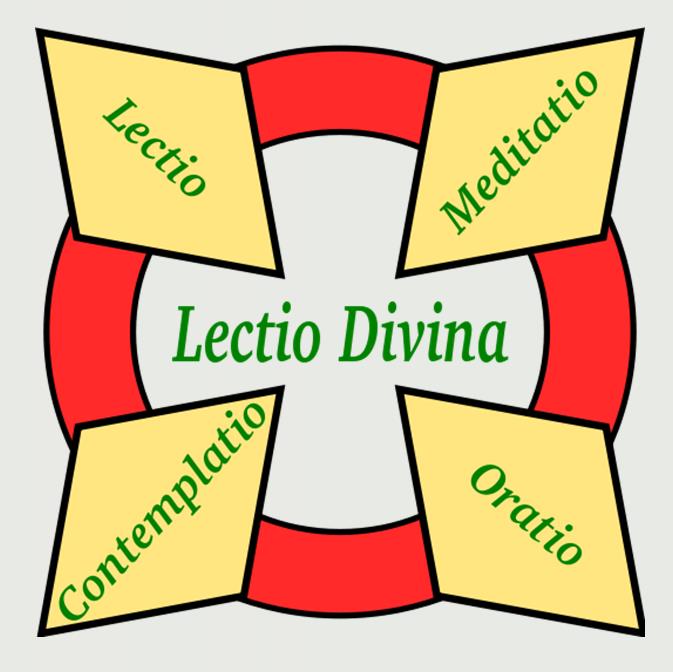
lectio-webAn ancient practice the church has used in regard to reading the sacred Scriptures is what is called lectio divina. In this practice of reading the bible, there are four movements. 1.) Lectio: simply reading the text of Scripture 2.) Meditatio: meditation on what is being read 3.) Oratio: the response to what is being read back to God, commonly known as prayer 4.) Contemplatio: this is resting in the Word of God while contemplating, or thinking about, the text.

Lectio (Reading) Acquaintanceship

  • Read the Scripture
  • Gather the facts
  • “Listen” to God’s word
  • What word/phrase speaks to you?
    (allow 1-2 min quiet time)

Meditatio (Meditation) Friendliness

  • Read the Scripture again
  • Let Jesus speak to you
  • Reflect on the message
  • What is God saying to you?
    (allow 3-4 min quiet time)

Oratio (Prayer) Friendship

  • Read the Scripture again
  • Let you heart respond to God
  • Trust God enough to become emotionally involved
  • What do you want to say to God?
    (allow 4-5 min quiet time)

Contemplatio (Contemplation) Union of Life

  • Read the Scripture a final time
  • Surrender to God’s presence
  • Rest in God beyond concepts
  • Feelings and particular acts
    (allow 5-10 min quiet time)

While there may be differences in teaching and practice at this website from what you are used to, there is also some great articles to bless you and encourage you in your journey with Jesus. Check it out: http://oblatesosbbelmont.org/

4 Principles for Prayer

glacier

John Calvin, a 16th century pastor/theologian, wrote on the subject of prayer in his Institutes for the Christian Religion. In Book 3, ch. 20, there can be four principles to guide our prayer life with God.

1.) a heartfelt sense of reverence
2.) a heartfelt sense of need and repentance.
3.) a heartfelt sense of humility and trust in God.
4.) a heartfelt sense of confident hope.

I have taken these four principles and have added excerpts from his writing for two of the principles, as well as two passages of Scripture from the Psalms to guide one in prayer. The idea is to help one to move into a posture, or frame of mind, to engage their relationship with God, as well as to then use the Psalms as a prayer guide to prayer.

Throughout church history the Psalms have long been used as a worship hymnal and prayer guide. Perhaps they can aid you as you enter into a contemplative prayer practice with Abba Father, Jesus our Savior, and the Holy Spirit our Comforter.

1.) a heartfelt sense of reverence

Let the first rule of right prayer then be, to have our heart and mind framed as becomes those who are entering into converse with God. This we shall accomplish in regard to the mind, if, laying aside carnal thoughts and cares which might interfere with the direct and pure contemplation of God, it not only be wholly intent on prayer, but also, as far as possible, be borne and raised above itself. I do not here insist on a mind so disengaged as to feel none of the gnawings of anxiety; on the contrary, it is by much anxiety that the fervour of prayer is inflamed. Thus we see that the holy servants of God betray great anguish, not to say solicitude, when they cause the voice of complaint to ascend to the Lord from the deep abyss and the jaws of death. What I say is, that all foreign and extraneous cares must be dispelled by which the mind might be driven to and fro in vague suspense, be drawn down from heaven, and kept grovelling on the earth. When I say it must be raised above itself, I mean that it must not bring into the presence of God any of those things which our blind and stupid reason is wont to devise, nor keep itself confined within the little measure of its own vanity, but rise to a purity worthy of God.

2.) a heartfelt sense of need and repentance.

Have mercy on me, O God, according to your steadfast love; according to your abundant mercy blot out my transgressions. Wash me thoroughly from my iniquity, and cleanse me from my sin! For I know my transgressions, and my sin is ever before me. Against you, you only, have I sinned and done what is evil in your sight, so that you may be justified in your words and blameless in your judgment. Behold, I was brought forth in iniquity, and in sin did my mother conceive me. Behold, you delight in truth in the inward being, and you teach me wisdom in the secret heart. Purge me with hyssop, and I shall be clean; wash me, and I shall be whiter than snow. Let me hear joy and gladness; let the bones that you have broken rejoice. Hide your face from my sins, and blot out all my iniquities. Create in me a clean heart, O God, and renew a right spirit within me. Cast me not away from your presence, and take not your Holy Spirit from me. Restore to me the joy of your salvation, and uphold me with a willing spirit. (Psalm 51:1-12 ESV)

3.) a heartfelt sense of humility and trust in God.

The third rule to be added is: that he who comes into the presence of God to pray must divest himself of all vainglorious thoughts, lay aside all idea of worth; in short, discard all self-confidence, humbly giving God the whole glory, lest by arrogating anything, however little, to himself, vain pride cause him to turn away his face. Of this submission, which casts down all haughtiness, we have numerous examples in the servants of God. The holier they are, the more humbly they prostrate themselves when they come into the presence of the Lord.

4.) a heartfelt sense of confident hope.

Bless the LORD, O my soul, and all that is within me, bless his holy name! Bless the LORD, O my soul, and forget not all his benefits, who forgives all your iniquity, who heals all your diseases, who redeems your life from the pit, who crowns you with steadfast love and mercy, who satisfies you with good so that your youth is renewed like the eagle’s. The LORD works righteousness and justice for all who are oppressed. He made known his ways to Moses, his acts to the people of Israel. The LORD is merciful and gracious, slow to anger and abounding in steadfast love. He will not always chide, nor will he keep his anger forever. He does not deal with us according to our sins, nor repay us according to our iniquities. For as high as the heavens are above the earth, so great is his steadfast love toward those who fear him; as far as the east is from the west, so far does he remove our transgressions from us. As a father shows compassion to his children, so the LORD shows compassion to those who fear him. (Psalm 103:1-11 ESV)

Colorado Schools, Shooters, and the Peace of God

The phone call was full of static and the voice was almost inaudible. Of the few phrases that could be understood, one pierced my soul and rattled me, “We’re on lockdown! The whole school is on lockdown!” Flashes of past Colorado school trauma ran through my mind. It is hard to pinpoint the emotions felt: anxious, nervous, angry, scared . . . there were probably more.

The police arrested a person who was sitting in the school parking lot. In his truck there was at least one high-powered rifle as well as an assortment of other things. Was he going to go into the school? Was he just getting ready to go hunting? With all Colorado has faced why sit in a school parking lot with that kind of paraphernalia? What was his agenda?

Colossians 3:15 exhorts the reader to “let the peace of Christ rule in your hearts”. When emotions scream louder than the verse on the page it is difficult to let peace reign in one’s heart; unless the peace of Christ is more than just an emotion. The Greek word for peace (εἰρήνη) occurs 48 times. It literally means peace of mind. It carries with it the sense of  wholeness, i.e. when all essential parts are joined together.(www.biblos.com) I forget that because I am in union with Christ, I am not only positionally at peace with God but I can also experience his peace in my life because I am poised to walk in the kind of life in which he enables me to walk.Part of the origin of the Greek word peace means “to join” . . . because we are joined with God through Jesus Christ we can experience His peace in unique ways and under any kind of duress.

Image

God’s peace does have emotional impact, but it goes further than that. God’s peace is present no matter the circumstance because my whole person is in union with Him, including my emotions. I can experience anxiety, anger, fear, etc. but these emotions do not have to rule my life. I am able to turn to God in that moment of anxiety due to trauma or impending tragedy and receive from Him the peace that passes understanding (Philippians 4:7.) It is the only way for me to be whole is to be in union with God through Jesus Christ.

My wife and my children are safe. They are back outside enjoying the spring day. And I am grateful. Grateful for their protection, grateful for God’s peace, and I am grateful for all the teachers who work so hard to protect our families.

Acts 1:8 & Serving in Our Vocational Identity

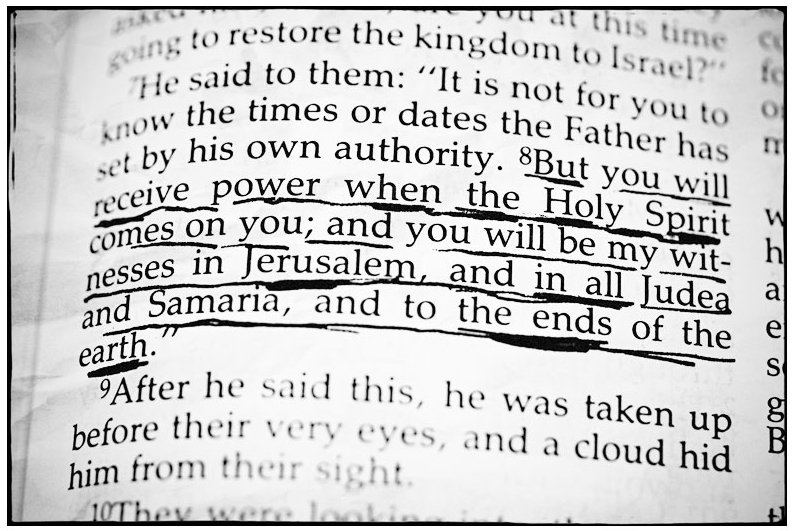
 ImageThe author of the biblical book of Acts wrote in his letter the words of Jesus, “But you will receive power when the Holy Spirit has come upon you, and you will be my witnesses in Jerusalem and in all Judea and Samaria, and to the end of the earth.” (Acts 1:8 ESV) It is interesting how Luke then proceeds to write how the Words of Christ are worked out in the rest of his book. You can see the details of the movement of God through His people in sending them first to Jerusalem, then to Judea and Samaria, then to the end of the earth throughout Acts.


Text

Region Named

Narrative of Ministry There

Acts 1:8: you will be my witnesses

in Jerusalem

Acts 1–7

in all Judea and Samaria

Acts 8–12

to the end of the earth

Acts 13–28


            I may or may not (probably not) go to the ends of the earth as a missionary for God. Most likely there will be no literal Judea or Samaria for me to go to, although I can understand and apply the authors intent and go to my own Judea & Samaria. In the same way my Jerusalem is Littleton, CO.

It makes me wonder how Acts 1:8 applies to vocational identity. Jesus, as he speaks to the disciples in Acts 1:8 tells them that they will receive power. This power that comes when the Holy Spirit has come upon you applies to all of us who receive Holy Spirit power at our salvific new birth experience. Our experience may look different than the apostle’s experience on the day of Pentecost, but Holy Spirit power is available for us to do what God has called us to do.

So what is it you and I are called, uniquely, to do in Holy Spirit power?

How can I be a witness for Christ in Littleton, CO? Or greater Denver (Judea?) Or Colorado (Samaria?) And so forth. How can you be a witness in your area?

What platform can you use that closely aligns with God’s unique gifting, passion, and skill set for your life? Paul wrote to the church in Ephesus that we are God’s workmanship, created to do good works. There is intentionality, there is craftsmanship, and there is design in the new believer to serve God in unique ways.

If we are seeking the Christ-Centered life together, what is the Christ-Centered life you and I are called to live and lead? We are not all created with the same gift mix. 1 Corinthians 12, 14; Romans 12 and Ephesians 4 all describe a gift mix from the Holy Spirit that differs from person to person in order to make up the whole body of Christ. I wonder, how do you use your gifts to be a witness for Christ in fulfilling the Great Commission in the power of the Holy Spirit?

Identify your vocational calling. Look for opportunities to be used by God. And respond to Him when He opens doors.

While we wait for opportunities to live in our vocational calling, allow our vocation to inform our identity (not create our identity, but to inform it.) If God has called you to pastoral ministry, but you do not have a pastoral position, then interact in a pastoral fashion with others. If God has wired you as an artist, then allow your creative juices to flow in and out of your ministry with and to others. There is immense joy and pleasure to be found in serving the kingdom of God in the way God has designed us to serve.

Life Questions

“Jesus’ questions focused almost entirely on living faithfully in response to the gospel now.” Marc Cortez makes a great point.


Here are some questions Jesus asked:

Do you really think it’s that impressive if you’re nice to people who are just like you?

Why are you anxious about little things like clothing?

Why do you spend so much time considering the flaws of other people and ignoring your own?

Why are you afraid?

Why do you think about evil things all the time?

Do you believe that I can do this?

Who is truly a part of my family?

Why did you doubt?

Who do people say that I am?

What could you possibly give in exchange for your life?

Can you endure what I will have to endure?

What do you want me to do for you?


Is it true, I wonder, if religious-minded folks can get so focused on the future (after-this-life) that they miss out on the present?


The gospel, as much as it is for life beyond now, is very much for life right now.


We must live in the present (there really is no other reality in which to live.) Soak in healthy relationships. Slow down enough to notice what is going on around us. Find activities we enjoy doing and friends with whom we enjoy doing those activities.


Take the questions Jesus asked others, and turn the questioning mirror a bit to our own lives. Which questions seems to resonate with you right now? Journal how you would answer some of those questions. I wonder what gifts are in store as we contemplate the answers.